
Anyone who loves a Saint Bernard eventually asks the hardest question about the breed: how long will we have together? Giant breeds generally live shorter lives than small and medium dogs, and the Saint Bernard is no exception. Common breed references often place the Saint Bernard lifespan at under ten years, though individual dogs vary. This guide is not about numbers. It is about making each stage of a Saint’s life a good one.
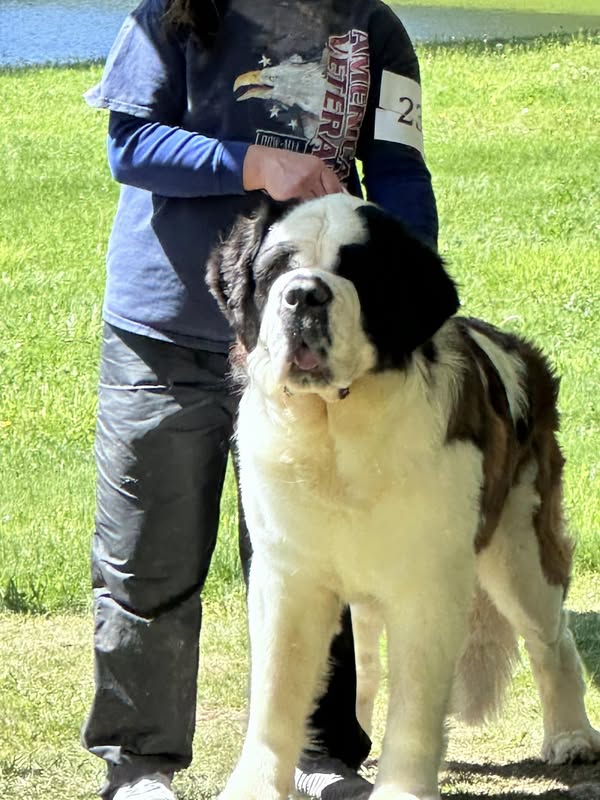
Saint Bernard Lifespan and Why Giant Breeds Live Shorter Lives
Across dog breeds, larger size tends to go with a shorter average lifespan. Giant dogs grow enormously in their first year or two and carry great weight on their frames for the rest of their lives. That is part of the bargain with any giant breed. No one can promise a particular number of years for any dog, so the best focus is on what owners can do: sensible growth, healthy weight, appropriate exercise, attentive veterinary care, and a life full of companionship.
Puppyhood: Building the Foundation
The first eighteen months or so shape the body the dog will live in for the rest of its life. A Saint puppy grows at an astonishing rate. Our Saint Bernard size and growth page explains what to expect.
- Feed for steady growth. Work with your breeder and veterinarian on a diet suited to a giant breed puppy, and keep the puppy lean rather than round.
- Protect growing joints. Avoid forced running, repetitive jumping, and long stair sessions. Let the puppy play freely on good footing and rest often.
- Socialize and train early. A well mannered dog is easier to care for at every age, including when it needs handling at the vet.
- Build routines. Regular handling of feet, ears, mouth, and coat makes lifelong care much easier.
Read more on raising a Saint Bernard puppy.
Adulthood: Keeping a Saint Fit and Lean
Once a Saint is mature, the goal shifts to maintenance. Extra weight puts more load on joints, heart, and every system in a giant body. Keeping your Saint lean is one of the most useful things you can do.
- Watch body condition, not just the scale. You should be able to feel ribs under a light layer of flesh and see a waist from above.
- Exercise daily, at a moderate level. Walks, exploring, and activities like carting keep muscles strong and minds engaged.
- Feed smaller meals and rest after eating. Like many deep chested breeds, Saints can be at risk of bloat. Many owners feed two or more meals a day and avoid hard exercise around mealtimes. Learn the signs of bloat and treat it as an emergency.
- Keep up regular veterinary visits. Find a vet who is comfortable with giant breeds and see them routinely.
- Groom regularly. Brushing, ear checks, nail trims, and cleaning the flews help you notice changes early. See our care and grooming guide.
Keeping Cool
Saints were built for cold mountain weather. Heat is hard on them at every age and harder still as they get older. Exercise in cool parts of the day, provide shade and fresh water, and keep air conditioning or good airflow available in warm months. A Saint that overheats needs prompt help.
The Senior Saint
Because the breed matures slowly and ages relatively early, a Saint may seem to go from adolescent to senior quickly. Watch for gradual changes: slower rising, shorter walks, more sleep, stiffness after rest, or changes in appetite and thirst.
- Adjust exercise. Shorter, more frequent walks on soft footing often suit seniors better than one long outing. See our Saint Bernard exercise guide.
- Give good footing at home. Rugs and runners on slick floors help a big dog stand and walk confidently.
- Provide a supportive bed. A thick, firm orthopedic bed helps protect pressure points.
- Plan for mobility. Ramps for cars and support harnesses can help a senior Saint stay active.
- See your vet more often. Discuss comfort, weight, and any changes you notice.
- Keep the mind busy. Gentle training, sniff walks, and puzzle feeders keep seniors engaged.
Saint Bernard Lifespan: Quality of Life Above All
Saint Bernard owners often say the hardest part of the breed is how short the time feels. The best response is to fill that time well: a calm home, a place in the family, good food, sensible exercise, and companionship. Saints are people dogs. Their greatest need, at every age, is to be with their family. Our temperament page explains why. A good Saint Bernard lifespan is measured in how well the years are lived, and our Saint Bernard shedding and Saint Bernards with kids guides cover everyday life with a Saint.
For breed background, see the AKC Saint Bernard breed page. If you are considering the breed, read our Saint Bernard guide, our myths and facts, and buying a Saint Bernard puppy in New England. You can also learn about FzyBr Saints and visit our puppies page.
Frequently Asked Questions
How long do Saint Bernards live?
Common breed references place the Saint Bernard lifespan at under ten years on average, though individual dogs vary.
How can I support a healthy Saint Bernard lifespan?
Support steady growth as a puppy, keep your adult lean, provide moderate daily exercise, protect your Saint from heat, and keep up regular veterinary care.
When is a Saint Bernard considered a senior?
Giant breeds age earlier than smaller dogs. Watch your individual dog for signs of slowing down and talk with your vet about senior care as those changes appear.
Does coat type affect Saint Bernard lifespan?
There is no reason to choose a Langhaarig or Stockhaarig coat based on lifespan. Choose the coat you love and care for it well.
What is bloat and why does it matter for Saints?
Bloat is a life threatening emergency in which the stomach fills with gas and can twist. Deep chested breeds are at risk. Learn the signs and contact a vet immediately if you suspect it.